AI Software Factory Engineering Foundation Training
AI Software Factory Engineering Foundation is a practical, high-intensity course for senior software engineers and hands-on technical leaders who are already fluent with agentic coding tools and will use Claude Code during the course. Over 9 sessions, you will learn how to make the system in which your AI writes code more effective and how to strategically spend your human attention when developing software with AI. The concepts and techniques in this course also lay the foundations for building your own software factory.
Any questions?
Michiel will gladly help you further with any personal or in-company needs you might have.

Melchior Schimmel
Chief Sales
What will you learn?
This advanced program bridges the gap between using agentic coding tools and designing the environment that makes agent work more predictable, self-correcting, observable, and continuously improvable. You will learn how to steer model behavior with richer context and personas, build guardrails that produce actionable feedback to agents, choose memory architectures for different use cases, orchestrate multi-agent workflows with oversight, run higher-autonomy agents in controlled sandboxes, and reduce cognitive load with deterministic and agentic review systems. We will also discuss how to help your team adopt some of these techniques. All of this is to make your agents run longer, be more reliable, and make you more effective while reducing your cognitive load as an orchestrator and reviewer.
Key takeaways
- Understanding how humans, agents, tools, memory, guardrails, and reviews fit together in the agentic SDLC
- Practical techniques for exploiting latent space through high-context prompting, speech-to-text, personas, model routing, and prompt evals
- Guardrail and memory patterns that turn repeated agent failures into reusable project knowledge and enforceable feedback
- Orchestration patterns for visible, bounded, recoverable agent workflows that can be reviewed at a higher level of abstraction
- Security, review, and team operating models for scaling agentic workflows while keeping agents sandboxed
- How to implement these techniques on a team level so your team can share, apply, and benefit from each other’s learnings.
Program
This hands-on program combines advanced theory, guided demonstrations, pair exercises, and project-oriented design work. Each session introduces a concept, shows how it appears in real agentic engineering workflows, and turns it into a concrete course artifact such as an agent brief, guardrail pack, memory evaluation, orchestration map, sandbox policy, review-agent brief, team playbook, adoption plan, or take-home project outline. Participants may apply the ideas to their own codebase or work with a provided reference project.
- Session 1: Introduction & Overview
– The Agentic Coding Ladder
– The Agentic SDLC
– The Agent Harness
– Why AI still needs a human
– Hands-on: Self-assessment, where does your team stand - Session 2: Exploiting Latent Space
– Latent space and capability space
– Shaping the output distribution
– Prompting with speech-to-text
– Matching tasks to models
– Advanced prompting techniques
– Evaluating and improving prompts
– Hands-on: Research & recruit your first AI agent - Session 3: Guardrails
– Guardrail-driven design
– Types of guardrails
– Anatomy of a good guardrail
– Enforcing guardrails
– Hands-on: Build a guardrail pack - Session 4: Agent Memory
– Memory is for context management.
– Memory architectures and tradeoffs
– Evaluating memory systems
– Hands-on: Try two memory systems
Who is it for?
This program is designed for senior software engineers and hands-on technical leads who are already familiar with advanced agentic coding patterns using Claude Code and want to take those skills to the next level. It is also suitable for senior developers, technical leads, software architects, platform engineers, DevOps engineers, QA engineers, and hands-on engineering managers responsible for AI adoption. It is especially valuable for teams that want to build custom internal coding environments, agent harnesses, guardrails, sandboxes, and review systems rather than merely adopting the latest AI tool.
Requirements
Practical software engineering experience in at least one programming language
Completion of Claude Code Mastery or equivalent hands-on experience with Claude Code, Codex, or a comparable agentic coding tool
Equivalent experience includes daily agentic coding, context engineering, custom skills/hooks, MCP or tool integrations, spec-driven workflows, and multi-agent orchestration.
Access to Claude Code for the course
Laptop with a configured development environment, terminal access, and permission to install or run local development tools
A project or codebase to use for exercises, or a willingness to work with a provided reference project.
What else
should I know?
This program includes a take-home project in the final session where participants combine the course practices into an agentic engineering workflow for their own codebase or a provided reference project. Each session builds on the previous one, and homework ensures continuous practice and immediate application. By the end of the program, you will be able to improve automation in your agile SDLC through orchestration, specialized agents, guardrails, and automated reviews. All concepts and techniques are foundational to building a software factory.
After registration for this training, you will receive a confirmation email with practical information, including setup instructions for Claude Code and the exercises. Advanced participants may apply these techniques to Codex or other CLI-based coding harnesses of their own choosing. A week before the training, we will send you preparation guidelines and a preparation invitation to maximize your learning experience.
See you soon!
Course information
The training is available online or in-person, in 2 days (4-5 sessions per day, 09:00-12:00 and 13:00-16:00 with lunch). Total duration is 12 hours across all sessions.
Each session includes hands-on work that turns the session topic into a concrete artifact. Participants recruit an agent, build a guardrail pack, compare memory systems, design an agent team, constrain an agent workflow, recruit a review agent, and create a team playbook and adoption plan.
The course is available for in-company delivery. Contact Xebia Academy for team-specific arrangements and scheduling.
Visit the Xebia Academy website or contact us for personal or in-company needs: Get in touch.
Meet the trainers
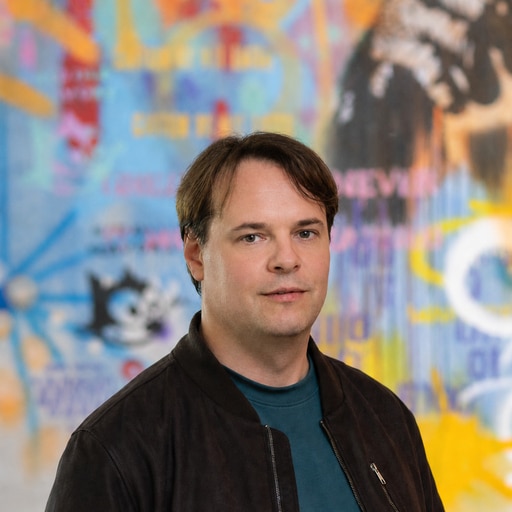
Florian Buetow
Florian is an engineering lead with 10 years of international experience in architecting and building large-scale distributed systems for information retrieval, data processing, and machine learning.
Also interesting for you
Ship intelligent features to production—not prototypes. While others struggle with LangChain theory, you’ll master semantic search, RAG systems, and multi-agent workflows using battle-tested Spring-AI and LangChain4j. Deploy AI that actually works in enterprise JVM apps.

Boost your impact by mastering how to clearly communicate technical ideas in business terms and influence stakeholders like a CTO – all in just one day.


Lead AI adoption with clarity and confidence. In three days, you’ll gain the strategic insight, governance foundations, and practical tools to guide responsible AI implementation, align leadership, and turn AI ambition into measurable business impact.

Agentic AI introduces a new generation of systems that can plan, reason, and take actions. In this hands-on course, developers will learn how to build AI agents using modern tooling and Google Cloud Platform, exploring concepts like tool use, planning, and multi-step reasoning.

Through demos, guided exercises, and collaborative activities, you’ll explore how agents make decisions, where they can add value, and what risks and limitations to watch for. You’ll leave with practical ideas for applying agentic AI in your own team or organization.

Master Agile leadership and boost your Scrum Team’s and organization’s performance with our PAL-E training.